
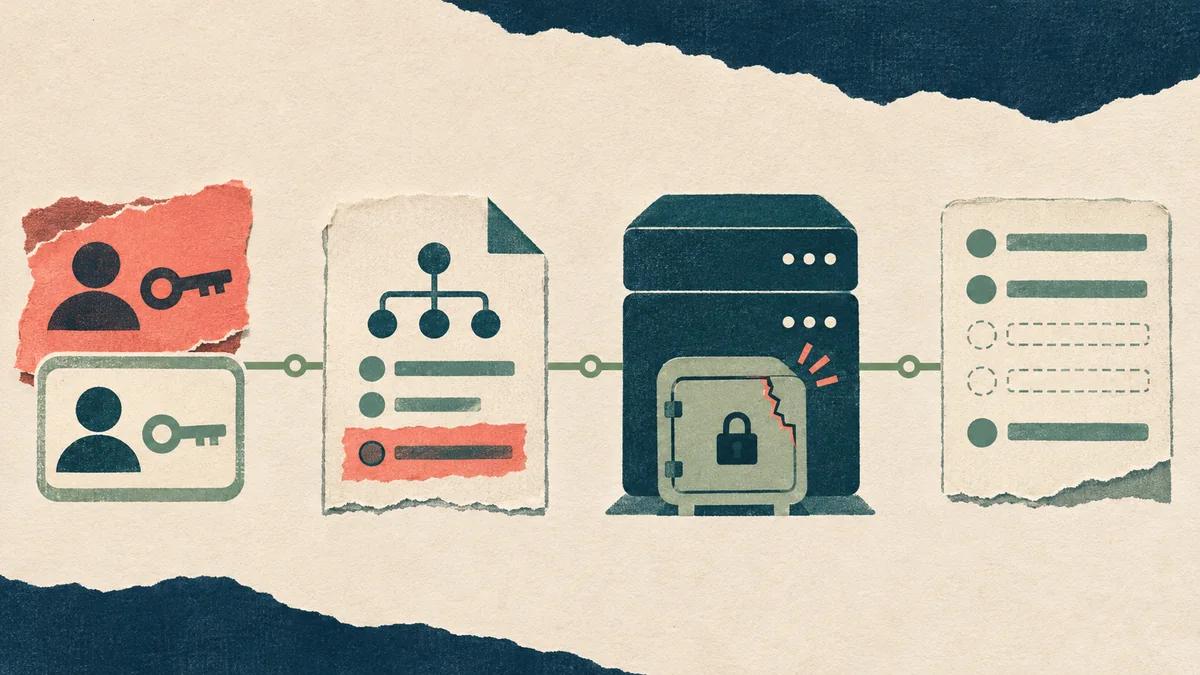
On November 10, a routine-looking pull request began appearing across GitHub repositories. Two days later, security researchers described the less routine sequence behind it: stolen developer and bot credentials tested where they could write, planted code that could read build secrets, then tried to erase the run that would have exposed the intrusion.
The distinction matters. This was not a newly disclosed flaw in GitHub Actions that every repository automatically suffered. The reported campaign depended on compromised accounts with repository access, then abused workflows and build credentials that those repositories made available. The cleanup step means a clean-looking branch is not enough to rule out exposure.
A probe, a payload, then a disappearing run
In its November 12 update, Aikido Security reported 4,837 compromised accounts and probes in 61,764 repositories. Its headline summary says at least 1,835 repositories ran the payload and had credentials exfiltrated; a detailed section on the same page still gives the earlier figure of 1,806. Treat this as a changing vendor estimate, not a complete independent census—and never read the probe total as the number of executions.
StepSecurity’s separate investigation examined more than 80 commits and described several delivery routes. In the common pattern, an attacker first opened a pull request titled docs: dependency audit notes from a wfx-docs branch. If a token could write to the repository, later commits could alter an existing workflow, add a hidden script and install hook, or put the payload into a shell script already called by CI. A runner that executes those changes can access whatever credentials its job receives.
The reported payload searched for GitHub Actions secrets, runner memory, and cloud credentials. Researchers also saw cleanup: a quick revert, deletion of workflow runs, and removal of branches. StepSecurity documented one repository where run numbers jumped from #1963 to #1965 after the injected job was deleted. That gap is a clue, not proof by itself; teams should correlate it with commits, audit events, and the run’s timing.
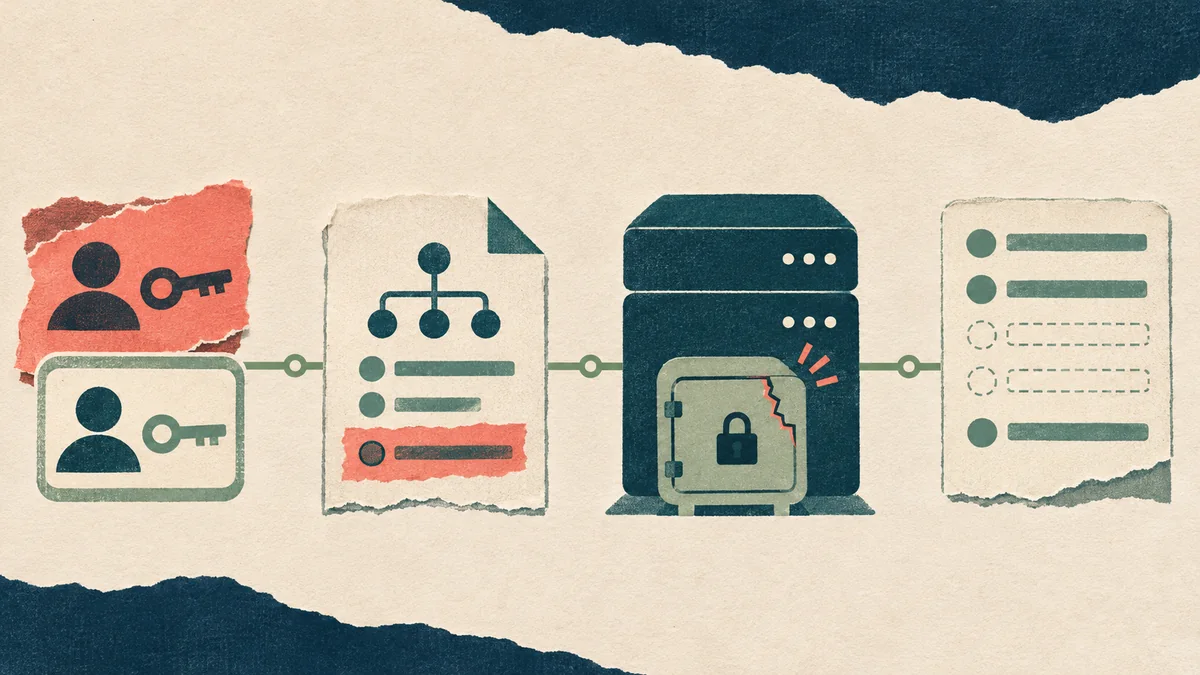
The route through CI is consequential because a build job can hold more authority than the person who last edited a source file realizes. It may read package-publishing tokens, deployment credentials, or short-lived cloud credentials. If an attacker can alter code that runs in that job, the job can become a bridge from a stolen GitHub account to other systems.
What the numbers do—and do not—say
The 61,764 figure is a repository-probing count from Aikido’s analysis. It is not the number of repositories where data theft was confirmed. The same report estimates successful executions from a sample; StepSecurity’s count of probe pull requests and commit samples uses its own collection method. Treat these as incident-response signals from security vendors, not a complete independent census of all GitHub activity.
The reports do not establish that all reachable credentials were later used. Aikido also reported malicious content in a Packagist release and workflow-only payloads in two Go module versions; a workflow file in a module is not the same as compromised Go source or release binary. Check the named package versions in the vendor report if your pipeline consumes them. A stolen secret still requires investigation: impact depends on what the job could access, whether a credential remained valid, and whether an attacker established persistence elsewhere. A revert does not invalidate a copied token or undo a cloud role change.
That is why GitHub’s own secure-use guidance for Actions recommends limiting token permissions and treating workflow code as security-sensitive. Its incident investigation reference also points responders toward auditing actions associated with compromised tokens. A workflow is executable code with permissions; reviewing it deserves the same care as reviewing application code.
A practical first-pass check
If your team uses GitHub Actions, start with repository and organization searches covering activity since November 10, 2026. The public indicators reported by researchers include:
- Pull requests titled
docs: dependency audit notes, often fromwfx-docs. - Commits such as
ci: refresh build cache,ci: restore,ci: cleanup,chore: add ci helper, orchore: add dependency audit workflow. - A file named
docs/wfx-audit.md, a hidden.ci-*.shscript, or an unfamiliarpostinstallhook inpackage.json. - Unexplained gaps in Actions run numbers close to a suspicious commit, plus quick reversions or deleted branches.
These are investigative leads, not a complete indicator list. Delivery and exfiltration options changed during the reporting window. StepSecurity described later samples that used Telegram, while Aikido’s report says the campaign configuration it analyzed used HTTP for the observed wave. That difference is another reason not to rely on a single network blocklist. Search commit history and organization audit logs as well as the current default branch; the absence of a suspicious file today does not establish that it never ran.
If you find a matching event, preserve what evidence remains and identify which workflow executed, which identity pushed the change, and what permissions and secrets that job could reach. If execution is plausible, treat every accessible credential as potentially exposed: revoke or rotate it, check cloud and package-registry audit logs for use, and investigate any new trust policies, keys, or accounts. Rotating a token alone may not remove persistence created with it.
Do not run suspicious scripts to see what they do. Avoid posting live tokens or full logs in public issues. For a small project without a security team, ask the affected GitHub organization or cloud administrator to help with audit-log review and credential rotation.
Lower the blast radius before the next incident
The durable defense is to make a stolen contributor credential less powerful and to make workflow changes visible. Give GITHUB_TOKEN only the permissions each job needs; avoid storing broad, long-lived secrets in jobs that process untrusted changes; require review for workflow-file changes; and remove stale collaborator or bot access. GitHub recommends least-privilege permissions, and its secure-use documentation explains why third-party actions and workflow triggers also need scrutiny.
For cloud deployments, prefer short-lived, narrowly scoped identity where supported, and audit the trust relationship that lets a workflow assume a role. Protect self-hosted runners as privileged machines, separate untrusted pull-request jobs from release jobs, and preserve audit logs outside the repository’s ordinary run list when your plan and retention controls allow it. These measures reduce risk; no single branch rule or secret scanner guarantees that a compromised identity cannot act.
The unnerving part of this incident is not that every developer must panic over a headline. It is that a workflow can briefly execute with real production reach, then leave behind a deceptively tidy branch. A missing run number can be more informative than the code that is no longer there. Check the history, identify the permissions behind each job, and rotate credentials when the evidence says they may have crossed the boundary.
This report is based on public incident research and GitHub documentation available on November 12, 2026. EkkySoft did not inspect affected private repositories or independently reproduce the malicious payload.