
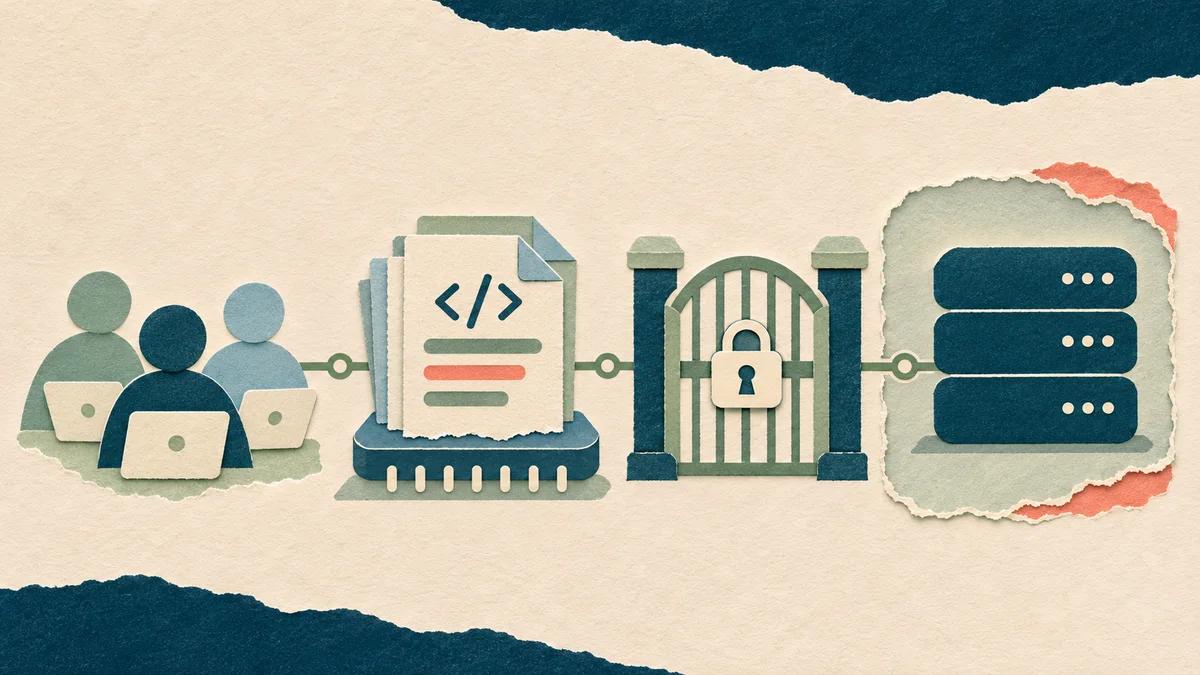
The 2022 Rockstar Games intrusion is back in the news after Arion Kurtaj pleaded guilty at Woolwich Crown Court on November 16, 2026, to the Rockstar hack and other offences committed as a teenager, according to BBC reporting from the court. The case is a striking reminder that a developer’s most valuable asset may be the work in progress nobody outside the studio has seen. For a small software team, the practical question is simpler: if one account is compromised, how much of the business can it reach?
Rockstar disclosed in a filing with the U.S. Securities and Exchange Commission that an unauthorized party accessed and downloaded confidential information, including early development footage for the next Grand Theft Auto. The filing described the event as a network intrusion, but did not publish a detailed technical postmortem. The court case has since put the story back in front of people; it does not tell every small company which single control would have prevented the intrusion.
That distinction matters. A dramatic incident can turn into a tidy lesson too quickly: “use this one app,” “buy this one tool,” or “the attacker used this one trick.” Real security is usually a set of limits around identities, devices, data, and recovery.
Start with the accounts that can change things
List the accounts that can access source code, cloud infrastructure, deployment systems, domain registration, payment providers, and customer data. Include people, shared accounts, automation identities, and external contractors. Then ask what each identity can do and whether it still needs that access.
For a small team, this can be a spreadsheet or a page in an internal handbook. The point is to make invisible access visible: who can publish a release, create a new administrator, read a production secret, or change a build workflow?
Use individual accounts instead of shared logins. Turn on multifactor authentication, prioritizing phishing-resistant options for accounts with administrator access where the service supports them. CISA’s identity and access guidance recommends strong authentication for privileged users and keeping ordinary and administrative accounts separate. Those steps do not make an account impossible to compromise, but they raise the effort required and make access easier to review.
Make one compromised account less powerful
Least privilege is a practical design rule: give an account only the access it needs for its current task. A developer who needs to review code should not automatically have permanent access to production databases. A build job should receive only the secrets it needs, for only as long as it needs them.
Separate development, staging, and production credentials. Prefer short-lived credentials over long-lived keys when your platform supports them. Keep secrets out of source code and logs, and make sure a test project cannot silently reuse production credentials. If a service offers scoped tokens, select the narrowest permissions that still let the task work.
These controls reduce the blast radius. They do not establish how the Rockstar intrusion happened, and they should not be presented as a reconstruction of that event. They are general safeguards for teams that depend on online accounts and connected development services.
Plan for the day something looks wrong
Write down who can suspend an account, revoke a token, pause a deployment, contact a vendor, and restore a clean copy of important work. Keep recovery information somewhere the affected account cannot erase. Practice the first few steps with a harmless scenario, such as a lost administrator phone or a leaked test credential.
When an incident occurs, preserve useful records before deleting or rebuilding things. Revoke credentials that may be exposed, review activity in connected services, and check for changes to permissions or recovery methods. If the account belongs to an outside service, use that provider’s current incident process. A small company without dedicated security staff can still agree in advance who makes those calls.
What the story can and cannot teach
The public record confirms that Rockstar suffered a network intrusion and that the case has returned to court. It does not provide a complete forensic report for other studios to copy. The useful lesson is not that every developer should expect the same attack; it is that valuable work often sits behind accounts with very different levels of power.
Start by knowing which accounts can reach your most important systems. Strengthen those accounts, remove access that no longer has a clear purpose, and decide how you would contain a compromised login. A small team may not be able to prevent every intrusion, but it can make sure a single compromised identity does not automatically become access to everything.